
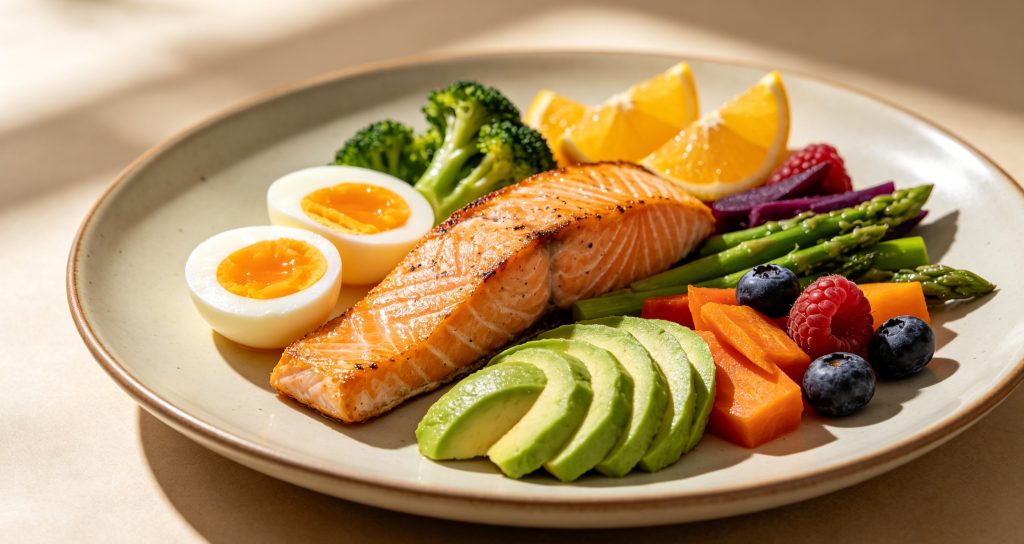
Eating nutritious meals rich in protein and vitamin C can help support your body’s recovery from inside out.
Recovering from liposuction involves much more than simply waiting for the swelling to subside.
Behind the scenes, your body is working hard to repair tissues, rebuild collagen, reduce inflammation and restore normal circulation. This healing process continues long after the visible bruising has faded.
While there is no single “superfood” that can speed up recovery, giving your body the right nutrition can provide the building blocks it needs to heal well.
At Chez Moi, we believe recovery is about caring for your body from both the outside and the inside. Alongside adequate rest, gentle movement and appropriate recovery therapies, good nutrition plays an important role in supporting your body’s natural healing process.
Protein: One of the Most Important Nutrients for Healing
If there is one nutrient to pay particular attention to after surgery, it is protein.
Your body relies on protein to repair damaged tissues, produce collagen and support wound healing. It also helps maintain muscle while your activity levels may be lower during recovery.
Rather than focusing on supplements alone, try to include a good source of protein with each meal.
Some nutritious options include:
- Fish
- Chicken
- Eggs
- Lean meat
- Tofu
- Tempeh
- Greek yoghurt
- Beans and legumes
If you’re unsure whether you’re getting enough protein, your surgeon or a registered dietitian can provide personalised advice based on your individual needs.
Vitamin C Helps Support Collagen Production
Collagen is an important part of tissue repair.
Vitamin C plays an essential role in helping your body produce collagen and supports normal wound healing.
Including plenty of vitamin C-rich foods is a simple way to support recovery.
Some excellent choices include:
- Kiwi
- Guava
- Oranges
- Papaya
- Strawberries
- Bell peppers
- Broccoli
A colourful variety of fruit and vegetables also provides antioxidants and other nutrients that contribute to overall health.
Stay Well Hydrated
Good hydration supports many of the body’s natural recovery processes.
Drinking enough water helps support:
- Healthy circulation
- Lymphatic flow
- Normal tissue function
- Overall wellbeing during recovery
Aim to sip water regularly throughout the day, especially if you’re wearing compression garments or returning to gentle activity.
Nourish Your Body with Whole Foods
After surgery, your body benefits from a balanced diet that includes a variety of whole foods.
Try to include:
- Plenty of vegetables
- Fresh fruit
- Whole grains
- Healthy fats
- Lean protein
These foods provide vitamins, minerals and fibre that support overall health while helping you maintain your energy during recovery.
If you’re taking pain medication, fibre-rich foods may also help reduce the likelihood of constipation.
What About Omega-3 Supplements?
Many people ask whether omega-3 supplements can help reduce inflammation after surgery.
Omega-3 fatty acids are known to support a healthy inflammatory response. However, the appropriate time to restart omega-3 supplements after surgery varies.
Some surgeons recommend avoiding omega-3 supplements around the time of surgery because they may increase the risk of bleeding.
If you’re considering restarting omega-3 supplements, it’s always best to check with your surgeon first.
Do Collagen Supplements Help?
Collagen drinks and powders have become increasingly popular, but they are often misunderstood.
While collagen supplements may complement a balanced diet, they cannot replace the importance of adequate protein intake.
Your body still needs sufficient protein, vitamin C and other nutrients to build and remodel collagen effectively during recovery.
Think of collagen supplements as one part of an overall healthy lifestyle rather than a replacement for good nutrition.
Are There Foods You Should Avoid?
Recovery is not the time for crash dieting or overly restrictive eating.
Your body needs energy to heal.
It may be helpful to limit:
- Excess alcohol, which may interfere with healing
- Highly processed foods with little nutritional value
- Excess sugar as part of an overall balanced diet
- Very salty foods if they seem to worsen water retention
Rather than aiming for perfection, focus on eating nourishing meals consistently.
Nutrition Is Only One Part of Recovery
Eating well can support your body’s natural healing, but recovery is influenced by many factors working together.
These include:
- Following your surgeon’s instructions
- Wearing your compression garment as advised
- Staying well hydrated
- Getting enough sleep
- Gentle walking and movement when appropriate
- Attending your follow-up appointments
- Starting recovery therapies only after medical clearance
Small, consistent habits often make the biggest difference over time.
Our Holistic Approach at Chez Moi
At Chez Moi, we believe recovery is not simply about reducing swelling or achieving a beautiful result.
It’s about supporting your body as it heals—helping you feel comfortable, move with confidence and recover well from the inside out.
Alongside gentle post-surgical recovery therapies, we encourage healthy lifestyle habits, balanced nutrition and adequate rest to create the best possible environment for healing.
Every recovery journey is unique, and we always recommend following your surgeon’s advice while giving your body the time and care it needs.
Frequently Asked Questions
Should I eat more protein after liposuction?
Protein plays an important role in tissue repair and collagen production. Including a good source of protein with each meal can help support your body’s natural healing process.
Is vitamin C important after surgery?
Yes. Vitamin C supports normal collagen formation and wound healing. Eating a variety of vitamin C-rich fruits and vegetables is a simple way to support recovery.
Can I take omega-3 supplements after liposuction?
Always check with your surgeon first. The appropriate time to restart omega-3 supplements depends on your individual procedure and recovery.
Will collagen drinks help me heal faster?
Collagen supplements may complement a balanced diet, but they should not replace adequate protein intake or other essential nutrients needed for tissue repair.
Is it normal to have a poor appetite after surgery?
Yes. Some people experience a reduced appetite during the first few days after surgery. If this happens, try to stay hydrated and choose small, nutritious meals that include a source of protein whenever possible.
Healing Starts from Within
Recovery after liposuction is a gradual journey.
While treatments and compression garments play an important role, simple daily habits such as eating enough protein, staying hydrated, getting adequate rest and following your surgeon’s advice can also help support your body’s natural healing process.
At Chez Moi, we believe that caring for your body from the inside out is one of the most meaningful ways to support a smoother, more comfortable recovery.