

Understanding why swelling develops after liposuction can help make the recovery journey less worrying and more predictable.
One of the most common questions we hear from clients recovering from thigh or lower body liposuction is:
“Why is my groin so swollen?”
Closely followed by:
“My ankles weren’t even treated… why are they swollen too?”
If you’re experiencing swelling around your groin, inner thighs or ankles after surgery, you’re certainly not alone.
Although it can be worrying, these are common areas where swelling may develop during the healing process.
Understanding why it happens can help you feel more confident about what your body is going through—and recognise when healing is progressing normally.
Why Does Swelling Happen After Liposuction?
Although liposuction is performed to improve body contours, it is still a surgical procedure.
During surgery, fat cells are removed and some of the tiny blood vessels and lymphatic vessels within the treated area are disrupted. Your body naturally responds by sending extra fluid, immune cells and healing factors to the area to begin the repair process.
This inflammatory response is an essential part of healing, but it also explains why swelling, bruising and tissue tightness are so common during the first few weeks after surgery.
As healing progresses, your body gradually clears this excess fluid while repairing and remodelling the tissues beneath the skin.
Why Is the Groin Often One of the Most Swollen Areas?
This surprises many people.
Even if only your thighs were treated, the groin often becomes one of the most swollen areas during recovery.
The reason lies in the lymphatic system.
The groin contains one of the body’s major groups of lymph nodes and lymphatic vessels. These act like an important drainage hub, helping to collect excess fluid from the legs and lower body before returning it to the bloodstream.
After liposuction, the amount of fluid that needs to be cleared increases significantly. At the same time, the tiny lymphatic vessels within the treated area are temporarily recovering from surgery.
As a result, the lymphatic system temporarily has much more work to do. This can lead to fluid accumulating around the groin before drainage gradually improves as healing progresses.
This is usually a temporary part of recovery and does not necessarily mean the lymph nodes themselves have been damaged.
Why Are My Inner Thighs Still So Swollen?
The inner thighs are one of the most commonly treated areas during liposuction and are also among the areas that tend to remain swollen for longer.
Several factors contribute to this:
- The tissues have undergone surgical trauma and inflammation.
- Healing tissues naturally attract fluid.
- Walking and movement are often reduced during the early stages of recovery.
- Swelling in the surrounding tissues can temporarily slow normal lymphatic drainage.
Many clients also notice that the inner thighs feel firm, tight or uneven during the first few weeks. This is often part of the normal healing process as swelling gradually subsides and the tissues continue to remodel.
Why Are My Ankles and Feet Swollen When They Weren’t Treated?
This is another question we hear quite often.
Swelling doesn’t always stay where surgery was performed.
Because of gravity, excess fluid naturally moves towards the lowest parts of the body, particularly when you’re standing or sitting for long periods.
Combined with reduced mobility during the early stages of recovery, it’s common for fluid to collect around the lower legs, ankles and feet.
Many clients notice:
- Puffy ankles
- Swollen feet
- Tight socks or shoes
- Legs that feel heavy by the end of the day
Although this can feel alarming, it is often a normal part of recovery and usually improves gradually as circulation and lymphatic flow recover.
How Long Will the Swelling Last?
Every person’s recovery is different, but swelling usually improves gradually over time.
As a general guide:
First 2–4 weeks
- Swelling is often at its greatest.
- Bruising gradually settles.
- Tissues may feel firm and tight.
1–3 months
- Much of the swelling begins to improve.
- Body contours become more defined.
- The tissues gradually soften.
3–6 months (or longer for some individuals)
- Residual swelling continues to settle.
- Collagen remodelling continues.
- Final results become increasingly visible.
Healing is rarely a straight line. Some days you may feel more swollen than others, especially after prolonged standing, travel or increased activity.
Can Anything Help Reduce the Swelling?
The most important part of recovery is following your surgeon’s post-operative instructions.
General measures that may support healing include:
- Wearing your compression garment as advised.
- Gentle walking and movement.
- Staying well hydrated.
- Consuming adequate protein to support tissue repair.
- Getting sufficient rest and sleep.
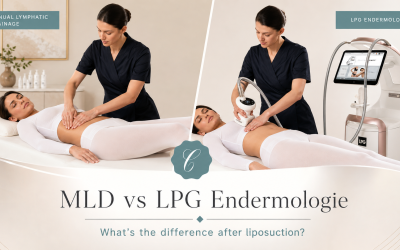
Once your surgeon has given clearance, some clients also choose supportive therapies such as LPG Endermologie to help encourage circulation, lymphatic flow, tissue mobility and overall recovery comfort.
These treatments are intended to complement—not replace—your surgeon’s advice and your body’s natural healing process.
When Should I Contact My Surgeon?
Although swelling is expected after liposuction, you should contact your surgeon promptly if you experience:
- Sudden or rapidly worsening swelling
- Severe or increasing pain
- Fever
- Increasing redness or warmth
- Wound discharge
- One leg becoming significantly more swollen than the other
- Any symptoms that concern you
These situations require medical assessment and should not be managed with aesthetic treatments alone.
Healing Takes Time
Recovery after liposuction isn’t simply about waiting for the swelling to disappear.
Your body is constantly repairing tissues, remodelling collagen, restoring circulation and gradually re-establishing normal lymphatic flow.
Everyone heals at a different pace.
With patience, appropriate post-operative care and your surgeon’s guidance, most swelling gradually improves over the weeks and months that follow.
If you’ve received medical clearance, supportive therapies such as LPG Endermologie may also play a role in encouraging circulation, lymphatic flow and tissue mobility as part of your recovery journey.
Frequently Asked Questions
Is groin swelling normal after thigh liposuction?
Yes. Because the groin contains one of the body’s main lymphatic drainage hubs for the legs, temporary swelling in this area is common during recovery.
Why are my ankles swollen when they weren’t treated?
Excess fluid can naturally move downwards due to gravity, especially when mobility is reduced during the early stages of healing.
Does swelling mean something went wrong?
Not necessarily. Swelling is a normal part of healing after liposuction. However, sudden worsening swelling, severe pain or signs of infection should always be assessed by your surgeon.
Can LPG Endermologie help with swelling after liposuction?
Once your surgeon has given clearance, some clients choose LPG Endermologie as part of their recovery programme to support lymphatic flow, circulation, tissue mobility and overall recovery comfort.
How long does swelling last?
Many people notice significant improvement over the first few months, although mild residual swelling can continue to settle for up to six months or longer depending on the individual and the extent of surgery.
Related Articles: