

Gentle movement is an important part of recovery after liposuction. As healing progresses, walking can help support circulation, lymphatic flow and overall comfort as recommended by your surgeon.
After liposuction, most people become very focused on one thing: reducing swelling.
It’s completely understandable.
Swelling can make clothes feel tighter, body contours appear uneven and treated areas feel heavy or uncomfortable. Naturally, many people want the swelling to disappear as quickly as possible.
But here’s something many clients don’t realise.
Reducing swelling is only one part of recovering well.
By the time your swelling has started to improve, your body is still carrying out thousands of tiny repair processes beneath the skin.
Healing doesn’t stop just because you look less swollen.
In many ways, it is only just beginning.
What Is Your Body Still Doing?
In our previous article, Why Recovery Doesn’t End When the Swelling Goes Down After Liposuction, we explored how healing continues long after bruising begins to fade.
Even when your body starts looking more like itself again, it is still busy:
- Rebuilding tiny blood vessels
- Restoring lymphatic circulation
- Repairing connective tissue
- Producing new collagen
- Strengthening the skin’s support structure
- Adapting to its new body contours
These changes continue quietly beneath the surface for weeks or even months.
This is why many surgeons assess the final results of liposuction several months after surgery—not just a few weeks later.
Healing takes time.
Swelling Isn’t the Only Thing That Needs to Recover
The lymphatic system plays an important role in removing excess fluid after surgery, which is why reducing swelling is often one of the first priorities during recovery.
However, your body is also repairing tissues that cannot simply be “drained.”
For example:
- Collagen fibres are reorganising.
- Tiny blood vessels are recovering.
- Skin is adapting to its new contours.
- Connective tissues are becoming stronger and more flexible.
These processes all contribute to how your body eventually feels and looks.
Recovery is therefore about much more than simply making the swelling disappear.
Supporting Your Body’s Natural Healing Environment
One of the biggest misconceptions about recovery treatments is that they “heal” the body.
In reality, your body heals itself.
Every second of the day, your body is repairing damaged tissues, rebuilding collagen and restoring healthy circulation without you even thinking about it.
The role of post-surgical recovery therapies is not to replace this remarkable process.
Instead, they aim to support an environment where healing can take place as comfortably and efficiently as possible.
Different therapies support different aspects of recovery.
Some focus on encouraging lymphatic flow and improving tissue mobility.
Others focus on supporting circulation, tissue quality and collagen remodelling.
Each has a different role depending on your stage of healing.
Why Different Recovery Therapies Exist
No single treatment can support every stage of recovery.
This is why surgeons and rehabilitation practitioners often recommend different therapies at different times.
For example, therapies that support lymphatic circulation and tissue mobility are commonly used during the earlier stages of recovery to help encourage fluid movement, improve comfort and maintain tissue flexibility.
As healing progresses, other therapies may be introduced to support:
- Healthy circulation
- Tissue regeneration
- Collagen remodelling
- Skin quality
- Long-term tissue recovery
Rather than competing with one another, these therapies often complement each other because they support different aspects of healing.
Different Therapies, Different Roles
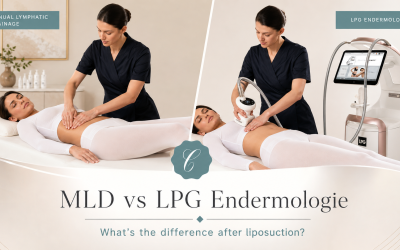
At Chez Moi De Beaute, two of the most commonly used technologies for post-liposuction recovery are LPG Endermologie and Indiba Proionic Therapy.
Although both are used to support recovery, they work in different ways.
LPG Endermologie
LPG Endermologie uses patented mechanical stimulation to gently mobilise soft tissues.
It is commonly used to support:
- Lymphatic flow
- Temporary swelling
- Tissue mobility
- Fibrosis management
- Scar mobility
- Fascial flexibility
Because it focuses on tissue movement and lymphatic stimulation, many clients begin with LPG as part of their post-operative recovery once their surgeon has given medical clearance.
Indiba Proionic Therapy
Indiba Proionic Therapy uses a patented 448 kHz radiofrequency designed to support healthy cellular activity.
Rather than focusing primarily on moving excess fluid, it is commonly used to support:
- Healthy circulation
- Tissue regeneration
- Collagen remodelling
- Skin quality
- Tissue flexibility
Many clients are introduced to Indiba as recovery progresses and the focus shifts from managing swelling to supporting tissue repair and long-term healing.
Recovery Is a Journey, Not a Single Treatment
One of the most common questions we receive is:
“Which treatment is better?”
The answer is that recovery isn’t about finding one treatment that does everything.
It’s about understanding what your body needs at each stage of healing.
For some people, that may mean focusing on lymphatic support first.
For others, it may involve introducing therapies that support collagen remodelling and tissue quality later in recovery.
Often, the most effective approach is not choosing one treatment over another—but using the right treatment at the right time.
Healing Is More Than What You Can See
It’s easy to judge recovery by looking in the mirror.
If the swelling has gone down, it’s tempting to think the healing is almost complete.
But beneath the surface, your body is still rebuilding itself.
Your skin is adapting.
Your connective tissues are reorganising.
Collagen is still being produced.
Healthy circulation continues to improve.
Understanding this can make recovery feel far less frustrating.
Healing isn’t simply about waiting for swelling to disappear.
It’s about giving your body the time—and the support—it needs to recover well.
Frequently Asked Questions
If my swelling has improved, am I fully healed?
Not necessarily. Although swelling often settles before healing is complete, your body may continue repairing collagen, connective tissue and circulation for several months.
Why do some areas still feel tight?
As collagen remodels and tissues adapt to their new shape, temporary tightness and firmness are common during recovery.
Do all recovery treatments do the same thing?
No. Different therapies support different stages of healing. Some focus on lymphatic flow and tissue mobility, while others support circulation, collagen remodelling and tissue regeneration.
Should I choose LPG or Indiba?
They are not competing treatments. Each supports different aspects of recovery and may be recommended at different stages depending on your surgeon’s advice and your individual healing progress.
When should I start recovery treatments?
Always follow your surgeon’s recommendations. The timing depends on your procedure, your healing progress and your individual recovery needs.
Continue Your Recovery Journey
Recovery is a process of understanding what your body needs at each stage of healing.
Explore the rest of our educational series:
Post-Liposuction Recovery Guide
- Post-Liposuction Recovery: Why Some Doctors Recommend Lymphatic Drainage
- Why Recovery Doesn’t End When the Swelling Goes Down After Liposuction
- Understanding Fibrosis After Liposuction
- Understanding Scar Adhesions After Liposuction
At Chez Moi De Beaute, we believe that informed clients make more confident recovery decisions. Our goal is to help you understand not only what to do after surgery, but also why your body is healing the way it is.